
The American Reconstruction
World War ZThis flow traces how the United States converts survival into production through labor, recycling, and strategic restraint.
increasing Bearing strength in each event
 decreasing
Bearing strength in each eventdecreasingRubble Economy
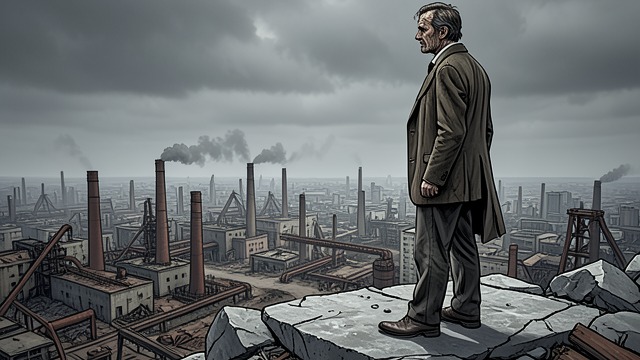
Rubble Economy
Crisis
Arthur Sinclair, Junior inherits starvation, refugees, broken transport, and abandoned industry.
Assignment
The Department of Strategic Resources must rebuild both people and production.
Premise
Victory depends on organizing ordinary labor rather than preserving prewar prestige.
Labor Reclassification
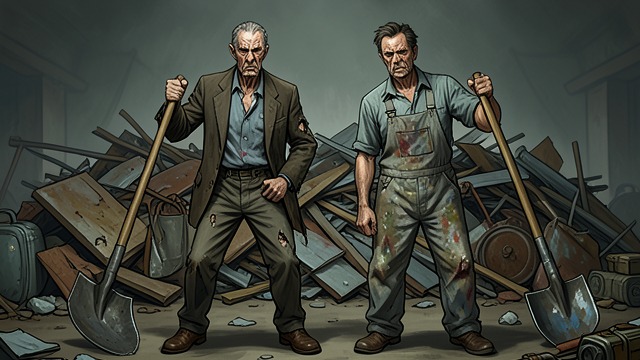
Labor Reclassification
Shortage
Most workers possess service-sector identities but few practical survival skills.
Retraining
The National Reeducation Act turns executives, artists, and clerks toward physical trades.
Reversal
Social status no longer guarantees usefulness.
Local Self Sufficiency
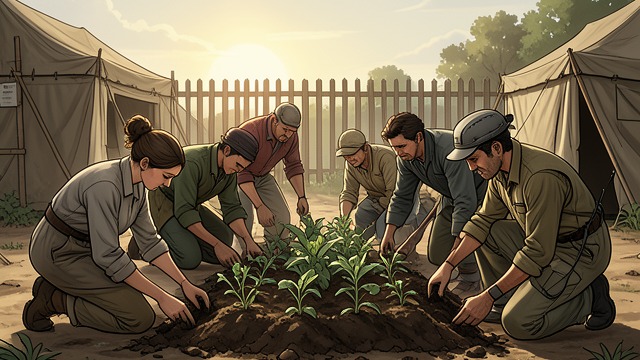
Local Self Sufficiency
Camps
Refugee centers become schools for gardening, repair, construction, and defense.
Recovery
Requests for state aid decline as communities learn to produce locally.
Change
The economy shifts from consumption to visible contribution.
Recycling America
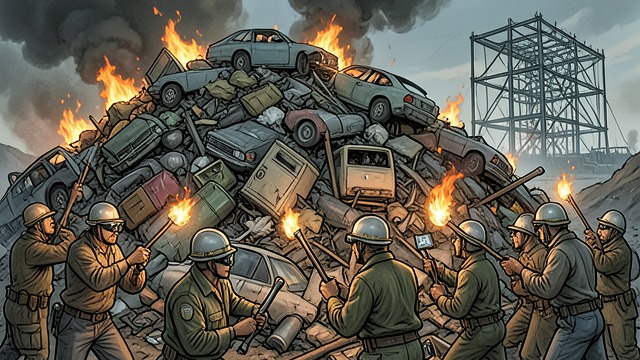
Recycling America
Material Base
Abandoned vehicles, appliances, and buildings become raw material.
Industry
A large workforce disassembles the old consumer economy into weapons and tools.
Insight
The previous society’s waste becomes the new society’s industrial advantage.
The Lobotomizer

The Lobotomizer
Design
Marines create a simple steel weapon from recycled automobiles.
Mass Production
Millions are manufactured because they require little fuel, training, or maintenance.
Symbol
The Lobotomizer embodies a civilization learning to value appropriate tools over impressive ones.
after the Rocky Line forms
first reconstruction months
three months into reconstruction
during wartime production
late wartime production
